

Bug Lights
On family, and the one rule that bends at dinner

Summer at Mamaw and Papaw’s came with its own sounds before it came with anything else. The train first, running the same track it had run since before any of us were born. Then the crickets, picking up where the train left off, loud enough some nights to keep a kid awake in a back bedroom, listening to a house I knew by feel, every creak and doorway familiar even in the dark. Then the cicadas, layered on top of everything else, so constant you stopped hearing them until they stopped.
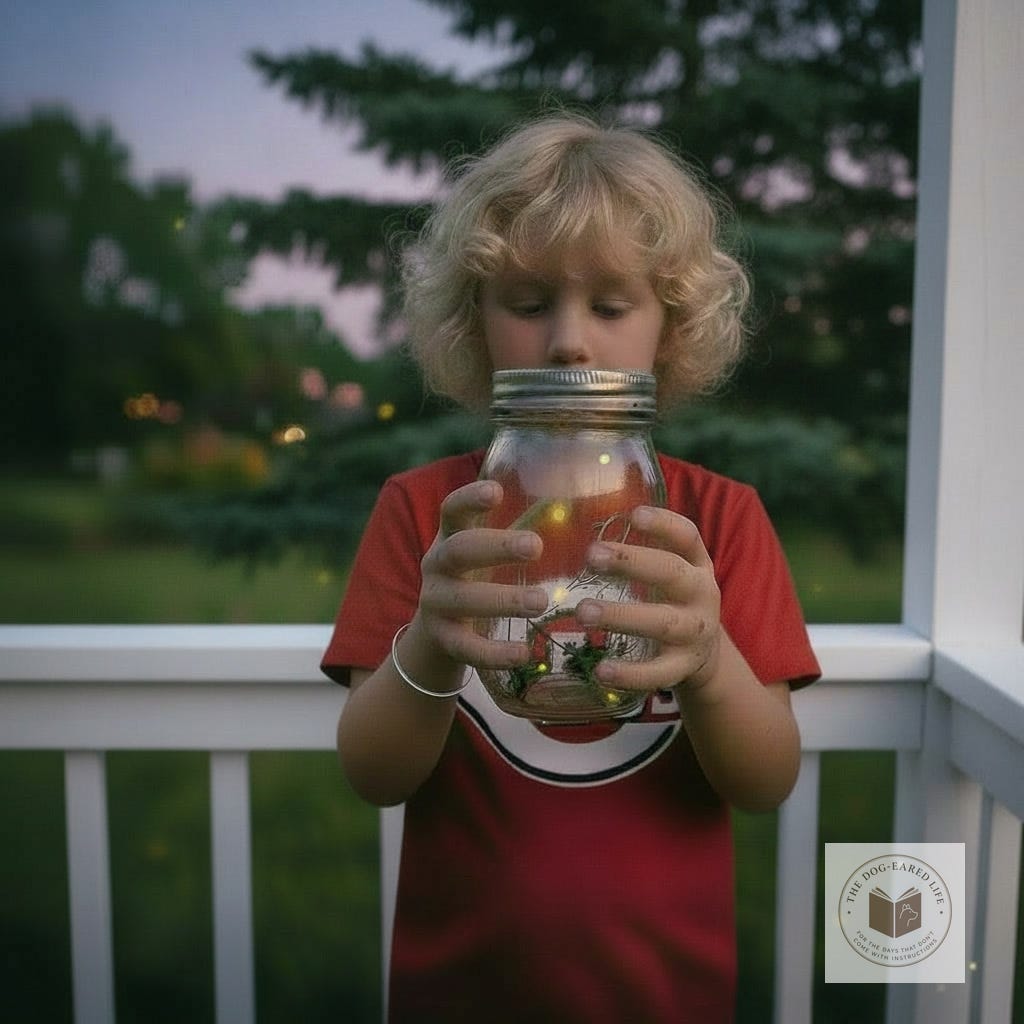
We caught lightning bugs in jars, lids poked with holes so they could live and breathe. Years later, my own two sons watched them the same way, chasing them barefoot across a yard, breathless with the thrill of it, and somewhere in that excitement, they came up with their own name for them. Bug lights. Nobody taught them that. They just decided.
Blackberries grew wild along the fence line, and picking them was less a chore than a dare, for whoever could reach the ripest ones without the thorns getting them first. We came back with purple fingers and no interest in admitting how few berries actually made it to the bucket.
Sundays were Shake ‘N Bake chicken, the whole house smelling like it by early afternoon, cousins underfoot, aunts and uncles filling every chair in the kitchen and half the porch besides. Mornings, no matter which side of the family, started the same way: biscuits and gravy, made without a recipe anyone had ever written down.
Dad’s side did summer differently and just as well. Lawn chairs unfolded under the beech tree in the yard, cookouts that ran long past when the food was actually ready. Bean soup and cornbread, a combination that sounds plain until you have had it made right, and then you spend the rest of your life measuring every other bowl of soup against it.
Both sides were large, the large where you stopped trying to keep track of second cousins and just called everyone cousin. Both sides fed everyone who showed up, and everyone showed up. It was rude not to eat. Rude not to take seconds. You could not leave hungry, and by their measure, you could not leave full either, not without at least one more offer crossing your path first, a plate refilled before you noticed it was empty, a “you sure?” that was never really a question. That was proper hospitality, the Appalachian way, and nobody meant a bit of it as pressure. The heart behind it was plain and pure; love passed across a table because that was the only language some of them had ever been fluent in. My husband met all of this for the first time as a grown man, city to his core, and still talks about the shock of it, the sheer volume of food and love aimed at a stranger who had done nothing to earn it but show up.

I did not know then that this was a kind of wealth. I only knew that summer sounded like trains and crickets, and tasted like blackberries and biscuits and Sunday chicken, and that there was always room for one more at the table.
I do not have that particular table anymore. But I still know what it sounded like, and some part of me is still listening for the train.